Spanish police admitted Kilmar Abrego García to Spain on Nov. 25, 2026, after questioning him for about two hours at the Madrid airport. His arrival ended the Trump administration’s effort to deport him to Africa. The 31-year-old Salvadoran sheet metal worker left the United States for a country he chose, but faces a 10-year legal bar to returning to his family in Maryland.
Two people familiar with his departure told The Washington Post that Abrego had negotiated a settlement with the Trump administration to leave the United States. They spoke on condition of anonymity because the agreement had not been made public. U.S. officials described his departure as a self-deportation and said he paid for his flight from Washington Dulles International Airport on Nov. 24.
Abrego made no advance agreement with the Spanish government, said Simon Sandoval-Moshenberg, a lawyer who traveled with him, his wife and his brother. Like other Salvadoran citizens with a valid passport, Abrego can stay in Spain for up to 90 days, officials said. Sandoval-Moshenberg said Abrego could seek asylum in Spain or elsewhere but had no immediate plans to do so.
Abrego fled El Salvador at age 16 after receiving death threats from the Barrio 18 gang. In 2019, a U.S. court barred immigration officials from sending him back to El Salvador. Judges found that the administration violated that order in 2025 when it sent him and 260 other immigrants to El Salvador’s Terrorism Confinement Center in an operation officials said targeted gang members. Abrego denied belonging to a gang.
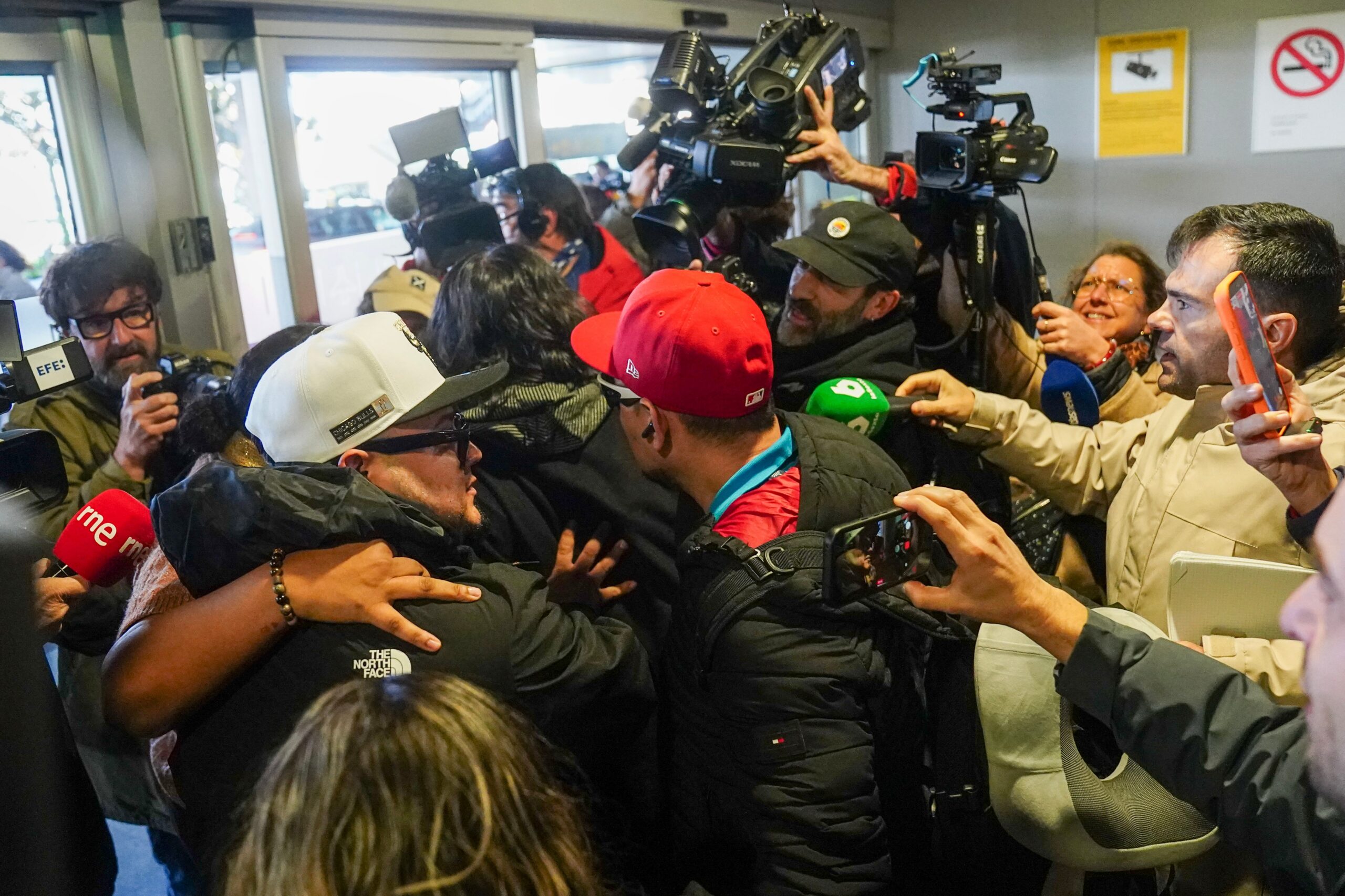
The administration brought him back to the United States after several courts, including the U.S. Supreme Court, ordered officials to facilitate his return. Federal investigators in Tennessee had reopened a human-smuggling investigation before he left El Salvador. A judge subsequently dismissed both charges against him. Immigration officials continued to seek his removal to a succession of African countries. Abrego spent more than 270 days in U.S. and Salvadoran custody, as well as months under house arrest in Maryland.
For months, Abrego had asked to go to Costa Rica. Its previous government had said it would accept him, but officials in the new administration said in October 2026 that they had no pending request and would reassess the matter if one arrived. Sandoval-Moshenberg said Abrego grew concerned that Costa Rica might send him to El Salvador.
Abrego’s wife, Jennifer Vasquez Sura, a U.S. citizen, has sponsored him for permanent residency. The 10-year bar stems from the time he lived in the United States without legal status. The Department of Homeland Security said after his departure that he would “never” return. His lawyers do not expect a waiver while President Donald Trump is in office, but said a future administration could grant one, particularly because his wife and their son are U.S. citizens.