Four Chinese government departments have jointly issued a plan to bring eldercare and childcare services closer to families. By 2030, the plan calls for nursing beds to account for 73% of all beds in eldercare institutions nationwide and for coverage by community eldercare providers and facilities to reach 70%. It also aims to raise the childcare enrollment rate for children under three by six percentage points from its 2025 level.
Nursing care in institutions and support at home
The plan calls for upgrades at 2,000 older public eldercare institutions. Lu Jiehua, a professor at Renmin University of China’s School of Population and Health, explained that the nursing-bed target is intended to help people with physical or cognitive impairments obtain institutional care. The community target serves a different need: older people living at home should be able to get help nearby with meals, bathing, cleaning and getting around.

In Linfen, Shanxi province, upgrades were underway at 38 public eldercare institutions in 2026. As of November 27, work was largely complete at 11, with construction continuing at the other 27. A newly completed welfare service center in Linfen’s Yicheng County has 150 nursing beds and 50 medical beds. More than 60% of its space is set aside for residents’ activities. Wristbands and monitoring mattresses can relay heart rate, breathing and how often a resident turns over in real time.
The plan also calls for closer coordination between medical and eldercare services and for mobile care in mountainous, pastoral and rural areas. In Yantou, a mountain village in Lishui, Zhejiang province, all of the village’s more than 150 older residents were on the local care coordinator’s service list in 2026. As temperatures fell, coordinator Chen Li visited residents at home to check their health and help them address heating hazards.
More childcare within 15 minutes of home
The plan supports renovations and extensions at kindergartens that can offer classes for two- to three-year-olds, with the aim of putting childcare within 15 minutes of home. It also supports extending services to rural communities where there is demand and encourages employers to work with specialist providers to offer childcare on their premises.
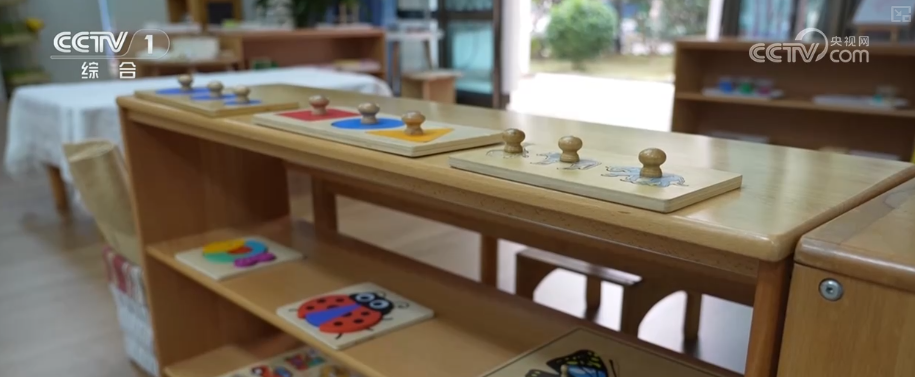
One kindergarten in Wenzhou, Zhejiang, offers half-day sessions of three to four hours so toddlers can get used to being away from their parents. Its full-day option lasts seven to eight hours and gives children time to learn routines such as eating and settling down to sleep. Toy cabinets are 40 to 60 centimeters high so children can reach them, and the classroom has lower sinks and furniture with rounded corners.

In Fuyang, Anhui province, Yingdong District recently opened its first public comprehensive childcare service center. Parents can use a phone to check the day’s menu and their child’s morning health record. Across the district, 57 childcare providers offer a total of 2,432 places.
Lu identified financial sustainability as a challenge for affordable childcare providers. He noted that the plan discusses developing branded chains and operating on a larger scale. In his view, government support on pricing and standards, along with preferential policies for privately funded providers, could encourage more investment.