The Communist Party of China has adopted a decision directing Party bodies to judge candidates for official posts by their records and conduct under pressure, rather than relying on statements and written assessments alone. The decision, approved at the fifth plenary session of the Party’s 20th Central Committee, also calls for local organizations to report problems up the chain and for Party bodies at different levels to work together to resolve them.
The directives apply to a Party that had 101.286 million members, 3,202 local Party committees and 5.431 million grassroots organizations at the end of 2025, according to figures cited by CCTV’s Focus Interview on November 28, 2026.

Selecting and training officials
The decision calls for appointments to reflect the requirements of each post. It directs Party bodies to select officials who demonstrate loyalty to the Party, integrity and a record of results, and to remove those who feign compliance or use their authority for personal gain. It cautions against lowering standards to fill a post, repeatedly replacing officials in the same job or moving an individual too often. Song Wei, a professor at Tsinghua University’s School of Marxism, said frequent personnel changes had affected both continuity in policy implementation and officials’ development.
For younger officials, the decision makes frontline work at the grassroots level a central part of training, alongside political education and supervision. It also addresses the Party’s role in developing and recruiting talent. It calls for action against academic fraud and plagiarism, misuse of prestigious talent designations, and practices that favor seniority or membership in influential academic circles.
Responsibilities from central agencies to local branches
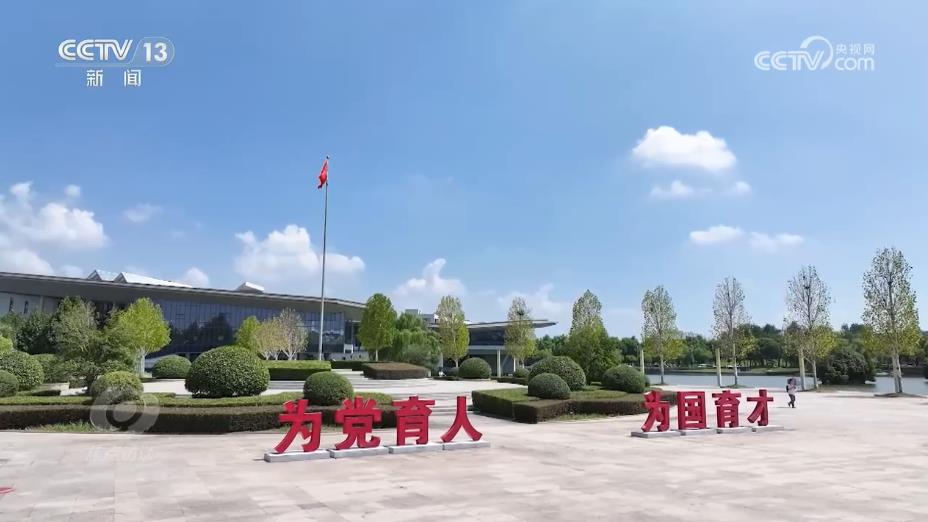
The decision assigns Party organizations in central Party and state agencies a leading role in carrying out Central Committee decisions. Local committees are responsible for passing those decisions on, while grassroots organizations put them into practice. Cui Weihang, director of the Academy of Marxism at the Chinese Academy of Social Sciences, pointed to depopulated villages, very large residential communities and border areas as places where the decision calls for closer attention to local Party organization.
In emerging sectors, the decision calls for clearer responsibilities and a wider Party presence in new economic and social organizations and among people in new forms of employment. Zhao Shumei, dean of Renmin University of China’s School of Chinese Communist Party History and Party Building, said the decision takes practices developed in recent years nationwide. She cited placing some enterprises’ Party organizations under higher-level supervision and giving greater attention to internet platforms and workers in new forms of employment.
Zhao said the decision spells out for the first time what coordination between levels of the Party should cover. Alongside procedures for communicating and implementing instructions from above, it calls for channels through which grassroots organizations can raise local concerns and seek help from other Party bodies to address them.