China’s Gansu Provincial Museum has completed its expansion and opened a special exhibition on Silk Road culture featuring 147 artifacts from the tomb of Murong Zhi, a senior Tang dynasty military officer. The exhibition had drawn more than 120,000 visits since opening, CCTV reported on November 27, 2026.
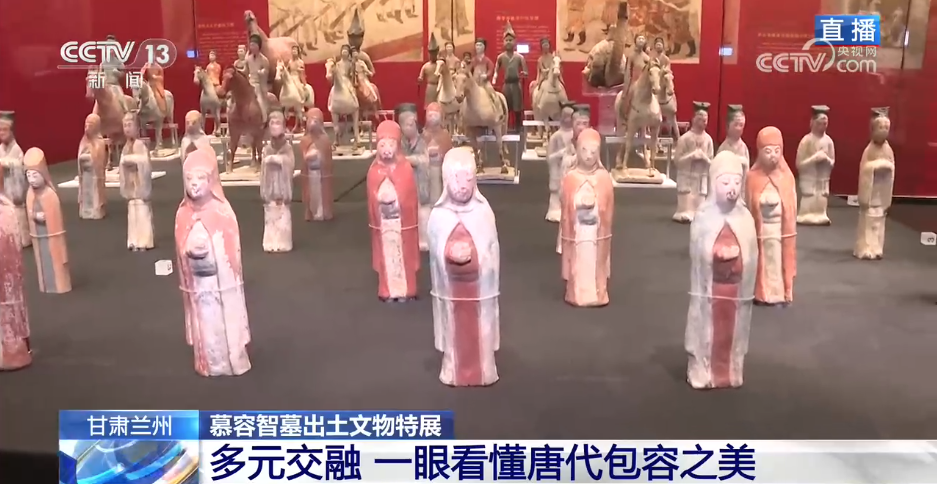
Painted figures in a ceremonial procession show how clothing traditions met along the Silk Road more than 1,300 years ago. The hooded figures wear garments that combine Han and Xianbei styles. In the textile display, peacock and lion motifs from regions west of China appear in embroidery on traditional Chinese silk.
A belt fitting helps identify Murong Zhi’s place in the Tang hierarchy. Officials’ ranks governed which materials they could use for belt fittings, including jade, gold, silver and copper. Murong Zhi held the upper third rank. Researchers used 3D scanning and reconstruction to recreate his appearance, estimating that he stood about 1.77 meters tall and weighed between 59 and 65 kilograms.
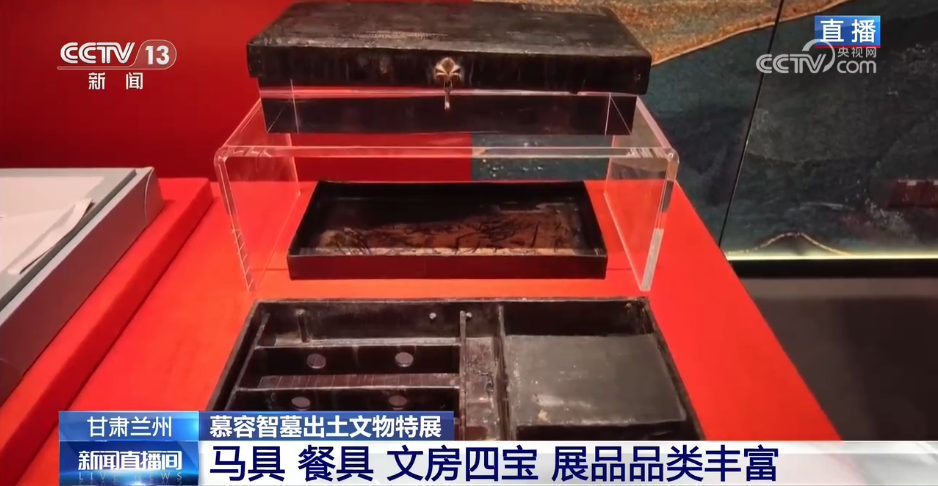
The tomb had not been looted before excavation, so archaeologists could see which objects had been placed together and where they lay. The finds include armor, horse tack, tableware and writing implements. A lacquered box protected a writing set from water, light and insects, preserving it largely intact. Among its contents was a writing brush, a rare example in China of a Tang dynasty brush that survives complete.